Spencer Stitch Scissors: Uses and Buying Guide
Learn about Spencer stitch scissors, their hooked blade design, common uses in suture removal, and the key factors to consider when sourcing them from a manufacturer or supplier.
Spencer stitch scissors are small, specialized scissors designed to remove stitches quickly and with minimal disturbance to the wound. Their hooked lower blade slips beneath a suture so it can be cut cleanly. This guide explains how Spencer stitch scissors are designed, what they are used for, and the key factors to consider when sourcing them from a manufacturer or supplier.
What Are Spencer Stitch Scissors?
Spencer stitch scissors, also called Spencer suture removal scissors, are a type of surgical scissors made for taking out sutures after a wound has healed enough. They are lightweight, compact, and built around one clear task: getting under a stitch and cutting it without pulling on the surrounding skin.
What sets them apart from general-purpose scissors is the shape of the blades:
- A hooked or notched lower blade that catches and lifts the suture.
- A sharp upper blade that cuts the thread against the hook.
- A slim, tapered tip that slides beneath the stitch with little resistance.
Because the tip is designed to pass under the suture, the scissors can cut the thread close to the skin, which helps keep the process comfortable and controlled. Surgical scissors come in many patterns, each built for a different task — this one is built around a single job.
How Spencer Stitch Scissors Are Designed
Blade and Hook
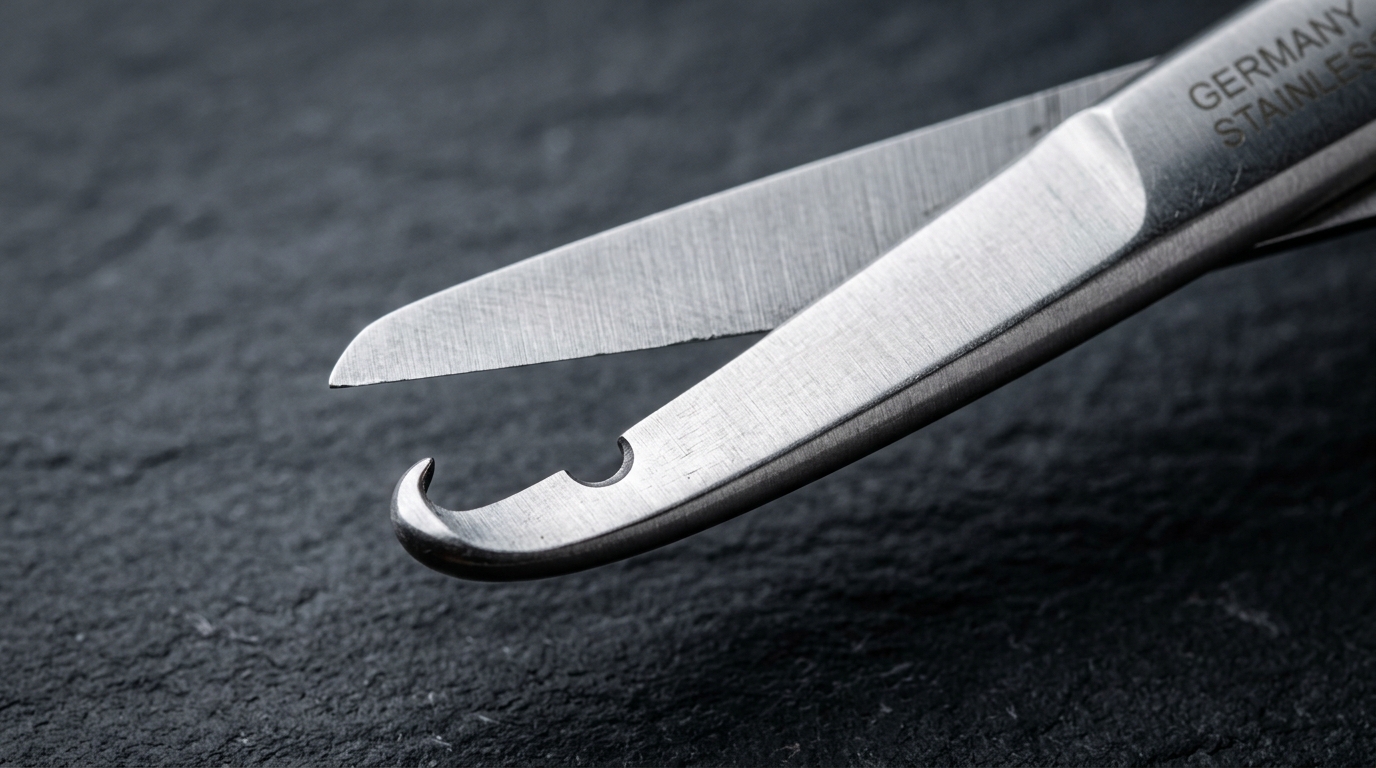
The lower blade has a small hook, notch, or beak. When the scissors are placed against a suture, the hook captures the thread and holds it in position. When the handles close, the upper blade cuts the suture against the hook. This reduces the chance that the thread slips away or that the skin is pulled upward.
Tip
The lower tip is typically slim and gently rounded or tapered so that it can slide under a stitch without catching the skin. The tip must be well finished, because rough or uneven tips are harder to slide beneath sutures. How the tip is shaped — sharp or blunt — directly affects how the instrument handles and how safe it is to use.
Size and Handles
Spencer stitch scissors are small and light, commonly around 3.5 to 5 inches (roughly 9 to 13 cm) long, although sizes vary by manufacturer. Finger rings are usually standard, and the overall balance should feel steady in the hand during fine work.
Material
Most are made from surgical-grade stainless steel, which resists corrosion and withstands repeated cleaning and sterilization. Some manufacturers also offer single-use versions. Full material and specification details are available in the Usfah Industry catalogue.
What Are Spencer Stitch Scissors Used For?
Their main purpose is suture removal. Common settings include:
- Clinics and hospitals, for removing stitches after minor procedures or surgery.
- Emergency and primary care, where wound follow-ups are routine.
- Dental and oral procedures, where small, controlled instruments are useful in confined spaces.
- Veterinary practice, for removing sutures from animal patients.
- Home-care and nursing settings, where trained staff handle wound care.
They are not meant for cutting dressings, heavy tissue, or hard materials. For tougher tissue, Mayo scissors are a better fit, and for fine dissection, Iris scissors are the more suitable choice. Using stitch scissors for the wrong job can bend the hooked blade and reduce its performance.
Spencer Stitch Scissors vs Other Suture Scissors
Several instruments can cut sutures, but they are designed differently:
| Instrument | Main design feature | Typical purpose |
|---|---|---|
| Spencer stitch scissors | Hooked lower blade, sharp upper blade | Removing sutures |
| Littauer stitch scissors | Sharp, angled lower tip for lifting sutures | Removing sutures |
| Iris scissors | Small, fine, pointed blades | Fine cutting and dissection |
| Mayo scissors | Heavy blades, blunt tips | Cutting dense tissue and thick sutures |
The shape of the tip — sharp or blunt — also affects how safely and cleanly an instrument cuts, which matters just as much as the blade design.
How to Use Spencer Stitch Scissors
The exact technique depends on training and clinical protocol, but the general approach is as follows:
- Make sure the area is clean and well lit, and follow the facility's infection-control procedures.
- Identify the suture and lift the knot gently with sterile forceps so the thread is visible.
- Slide the hooked blade under the suture, close to the skin on one side of the knot.
- Close the scissors to cut the thread.
- Remove the suture carefully in the direction recommended by clinical guidelines, without pulling it through the wound more than necessary.
This summary is general information only. Suture removal should be performed by trained professionals following the relevant protocol.
Key Factors to Consider When Buying Spencer Stitch Scissors
Whether you are equipping a clinic or supplying a distribution business, check these features before you buy.
1. Hook and Tip Quality
The hook should be smooth, well formed, and consistent from pair to pair. The tip should slide under a suture without catching, and it should not have burrs or rough spots.
2. Blade Sharpness and Alignment
The upper blade should cut the thread cleanly against the hook with a single, smooth closing action. Poor alignment leads to dragging, slipping, or partial cuts.
3. Material and Finish
Look for surgical-grade stainless steel with a smooth, even finish. A good finish makes cleaning easier and holds up to repeated sterilization. Ask which grade of steel is used.
4. Size and Handling
Choose a length that feels balanced and controlled. Check that the finger rings are comfortable and that the pivot moves smoothly without wobble or stiffness.
5. Reusable or Single-Use
Reusable scissors need to withstand reprocessing and should be inspected regularly for hook wear. Single-use scissors remove the need for reprocessing but have a different cost profile.
6. Sterilization Compatibility
Confirm that the scissors are suitable for the sterilization method your facility uses, and ask the manufacturer for reprocessing instructions. Autoclave parameters and care protocols vary by instrument type and steel grade.
Sourcing Spencer Stitch Scissors from a Manufacturer or Supplier
Buying in volume calls for a little more due diligence. Consider asking the following:
- Quality management system. Ask whether the manufacturer works under a recognized quality system for medical devices, such as ISO 13485.
- Regulatory documentation. Confirm what approvals or registrations your market requires, and ask for the relevant documents.
- Materials information. Ask for the steel grade and any available material documentation.
- Samples. Request samples and test them for hook shape, sharpness, alignment, and feel before placing a larger order.
- Consistency. Ask how the manufacturer checks consistency from batch to batch.
- Customization. If you need private labeling, custom packaging, or specific sizes, ask whether these are available and what the minimum order quantities are.
- Packaging. Check that packaging protects the tips and hooks during shipping.
- Lead times and communication. Confirm production and delivery times, and see how responsive the supplier is to questions.
- After-sales support. Ask how returns, replacements, and quality complaints are handled.
A reliable supplier will answer these questions clearly and provide documentation on request. If a supplier is vague or avoids specifics, treat that as a warning sign. Usfah Industry surgical scissors are manufactured to ISO 13485 standards — get in touch for wholesale pricing, OEM options, and documentation.
Care and Maintenance
Good care extends the life of the hook and the cutting edge:
- Clean the scissors promptly after use so residue does not dry on the blades or in the hook.
- Open them fully during cleaning and pay attention to the pivot and the hooked area.
- Store them so the tips are protected from knocks and from contact with heavier instruments.
- Sterilize them according to the manufacturer's instructions.
- Inspect the hook, tip, and blade edge regularly, and replace or have repaired any scissors that are bent, dull, or misaligned.
- Use them only for suture removal.
Final Thoughts
Spencer stitch scissors do one job and do it well: removing sutures cleanly and with control. Their hooked blade and slim tip set them apart from general surgical scissors. When buying them, focus on hook quality, blade alignment, material, and finish, and when sourcing from a manufacturer or supplier, check quality systems, samples, and documentation before committing to a larger order. Usfah Industry manufactures ISO 13485 certified surgical instruments for hospitals, distributors, and surgical centres worldwide — reach out for enquiries.
Frequently Asked Questions
What are Spencer stitch scissors used for?
They are used to remove stitches. The hooked lower blade slips under a suture so it can be cut cleanly near the skin.
How are Spencer stitch scissors different from regular scissors?
They have a small hook or notch on the lower blade and a slim tip designed to pass beneath a suture, which regular scissors do not have.
Can Spencer stitch scissors be used for cutting dressings or tissue?
They are not designed for that. Dressings call for bandage scissors, and tissue cutting calls for surgical scissors made for the task.
How long are Spencer stitch scissors?
Most are around 3.5 to 5 inches (about 9 to 13 cm), though sizes vary by manufacturer.
What should I look for when sourcing them from a supplier?
Check the hook and tip quality, blade alignment, material, finish, and sterilization compatibility. Also ask about quality systems, documentation, samples, and minimum order quantities.
Are reusable or single-use stitch scissors better?
It depends on your setting. Reusable scissors cost less per use but need reprocessing and inspection, while single-use scissors are convenient and avoid reprocessing.