Straight vs Curved Surgical Scissors: Which Should You Choose?
Learn the key differences between straight vs curved surgical scissors, including blade shapes, visibility, reach, dissection applications, and selection criteria.
The main difference between straight vs curved surgical scissors is the shape of the blades: straight scissors cut in a direct line with the handles, while curved scissors bend away from them. That small change affects visibility, reach, and control inside the surgical field. This guide explains how each design works, where each is commonly used, and how to choose between them.
Understanding how blade geometry impacts handling allows clinical procurement managers and surgical teams to select appropriate surgical cutting tools for operating room trays.
Quick Answer: Straight vs Curved Surgical Scissors
Straight scissors are generally preferred for cutting sutures, dressings, and tissue near the surface where a direct line of cut is needed. Curved scissors are generally preferred for dissection and for working in deeper or more confined areas where the curve improves tip visibility. Neither design is inherently better in every situation; the right choice depends on procedure depth, tissue density, and clinical task.
What Are Straight Surgical Scissors?
Straight surgical scissors have blades that extend in a straight line from the central pivot pin. Because the cutting edge follows the same linear axis as the hand, the direction of the cut is direct and easy to predict.
Common uses include:
- Cutting sutures, ligatures, and heavy surgical threads.
- Trimming surgical dressings, sterile drapes, and utility materials.
- Cutting superficial tissue in shallow, easily visible surgical fields.
Advantages: Predictable cutting direction, precise linear control for straight cuts, and an intuitive, familiar feel for surgical technicians.
Limitations: In deep anatomical cavities, the surgeon hand and scissor shanks can obstruct the direct line of sight to the working tips.
What Are Curved Surgical Scissors?
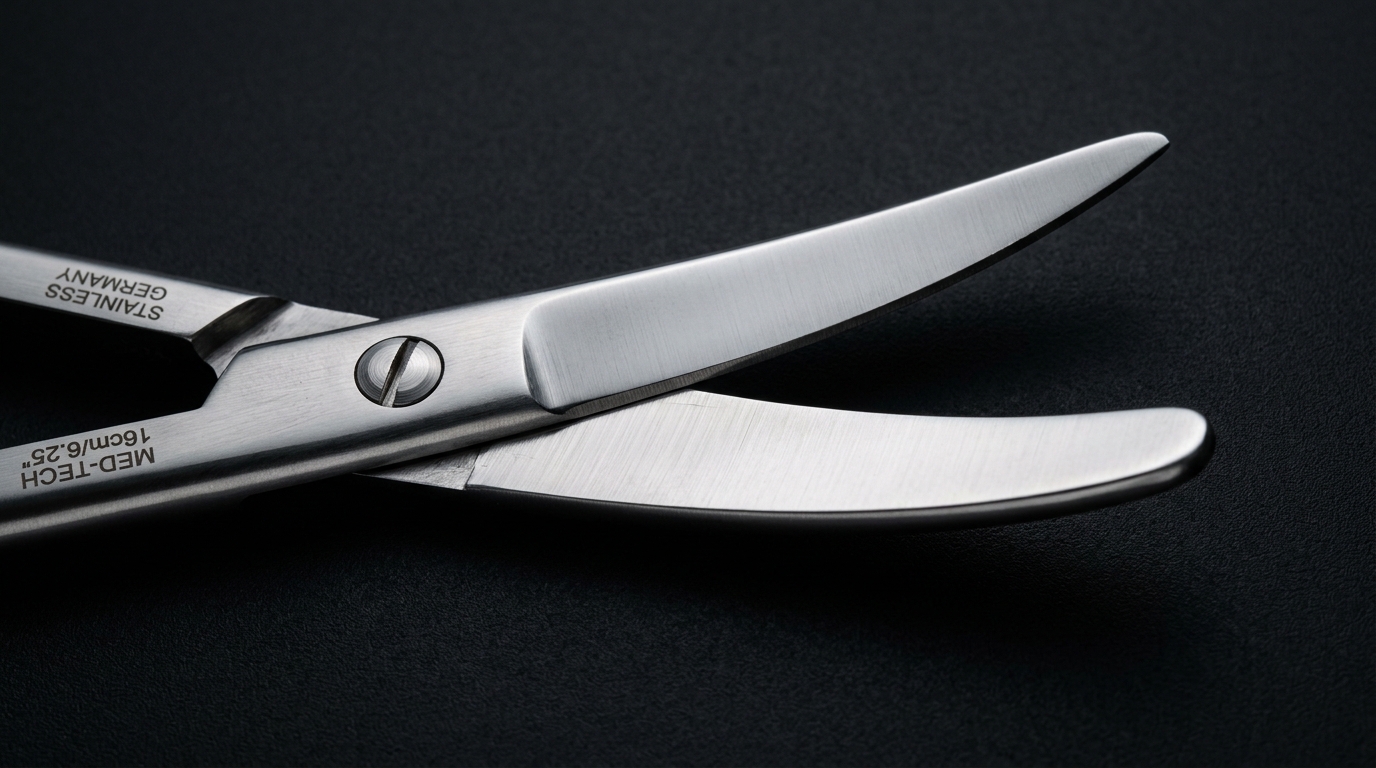
Curved surgical scissors feature blades that bend gently to one side away from the handle axis. When the curve is turned away from the line of sight, the hand sits further away from the tips, allowing the operator to view the cutting edge more clearly.
Common uses include:
- Dissecting and separating natural tissue planes.
- Working in deep or narrow anatomical cavities (abdominal, pelvic, thoracic).
- Following tissue contours around delicate blood vessels and nerve sheaths.
Advantages: Superior tip visibility in deep surgical fields, improved access around delicate structures, and effective geometry for blunt dissection.
Limitations: The cutting line is non-linear, requiring greater care for straight sectioning, and curved blades are generally avoided for routine suture trimming to prevent premature edge dulling.
Straight vs Curved Surgical Scissors: Side-by-Side Comparison
| Feature | Straight Scissors | Curved Scissors |
|---|---|---|
| Blade Shape | Straight, aligned with handles | Gently curved to one side |
| Cutting Direction | Direct and predictable linear line | Follows the anatomical curve of the blade |
| Visibility in Deep Fields | Can be obstructed by hand position | Enhanced visibility above working tips |
| Typical Applications | Sutures, dressings, superficial tissue | Tissue dissection, deep cavity procedures |
| Handling Feel | Intuitive linear ergonomics | Angled alignment tailored for dissection |
How Design Affects Handling, Access, and Application
Handling: Straight scissors feel intuitive because the blade edge lines up directly with hand motion. Curved scissors introduce an angled cutting plane that surgeons master with practice for precise anatomical maneuvering.
Access: In deep or narrow fields, the blade curve allows working tips to reach around tissue layers while keeping the surgical site visible. In shallow procedures, linear straight blades offer direct mechanical leverage.
Application: Matching tool geometry to the clinical task is vital. Straight blades suit clean, direct sectioning, while curved blades facilitate tissue mobilization. Standard operating room sets incorporate both patterns so surgical teams can switch smoothly as procedures progress.
Examples of Straight and Curved Scissors
Several core surgical instrument patterns are manufactured in both straight and curved configurations:
- Mayo scissors: Heavy-duty scissors built for dense fascia and sutures. Straight patterns cut sutures, while curved patterns dissect tough muscle and connective tissue.
- Metzenbaum scissors: Slender shears with high shank-to-blade ratios engineered for delicate soft tissue dissection, available in straight or curved patterns.
- Iris scissors: Small, razor-sharp precision scissors for micro-vascular, ophthalmic, and plastic surgery.
How to Choose Between Straight and Curved Surgical Scissors
Consider these clinical criteria before selecting scissors for surgical kits or hospital inventory:
- The Clinical Task: Choose straight blades for direct surface cuts and suture sectioning, or curved blades for tissue dissection.
- Field Depth: The deeper the surgical cavity, the more curved blades assist with line-of-sight tip visibility.
- Tissue Density: Match the scissor pattern to tissue resistance—heavy Mayo scissors for tough fascia versus Metzenbaum scissors for delicate organs, as detailed in Mayo vs Metzenbaum scissors technical guides.
- Tip Profile: Sharp tips provide micro-entry precision, while blunt tips protect underlying structures during dissection.
- Ergonomics & Length: Well-balanced finger rings and appropriate overall length (from 4.5" to 11") reduce surgeon fatigue.
- Material & Metallurgy: Standard instruments feature surgical martensitic AISI 420/440 stainless steel. Premium versions utilize tungsten carbide inserts for extended edge retention.
- Reprocessing Standards: Reusable stainless steel tools must comply with hospital autoclave sterilization care protocols, while single-use tools eliminate reprocessing cycles.
Final Thoughts
The choice between straight vs curved surgical scissors depends on specific procedural demands. Straight blades deliver direct, predictable linear cuts, while curved blades provide enhanced visibility and access for tissue dissection in deeper fields. Understanding how blade curvature affects handling, access, and application helps surgical teams select instruments crafted to international quality specifications listed in the surgical instruments catalog.
Frequently Asked Questions
What is the main difference between straight and curved surgical scissors?
The primary difference is the blade geometry. Straight surgical scissors cut in line with the handles for direct, predictable cuts, whereas curved surgical scissors bend away from the handles, giving surgeons superior tip visibility and maneuverability in deeper anatomical fields.
Which is better for cutting sutures, straight or curved scissors?
Straight surgical scissors are preferred for cutting sutures because the linear blade alignment provides direct visual line of sight and accurate control when sectioning threads and dressings.
Are curved scissors better for dissection?
Yes. Curved blades allow surgeons to keep working tips visible above hand position while maneuvering around delicate tissue planes, making them the standard choice for tissue dissection.
Can the same scissor family come in both straight and curved shapes?
Yes. Major surgical scissor patterns such as Mayo scissors, Metzenbaum scissors, and Iris scissors are routinely manufactured in both straight and curved variations.
Do surgical instrument sets include both straight and curved scissors?
In almost all operating room settings, yes. Standard surgical trays include both straight and curved patterns so surgical teams can alternate based on procedure depth and tissue requirements.